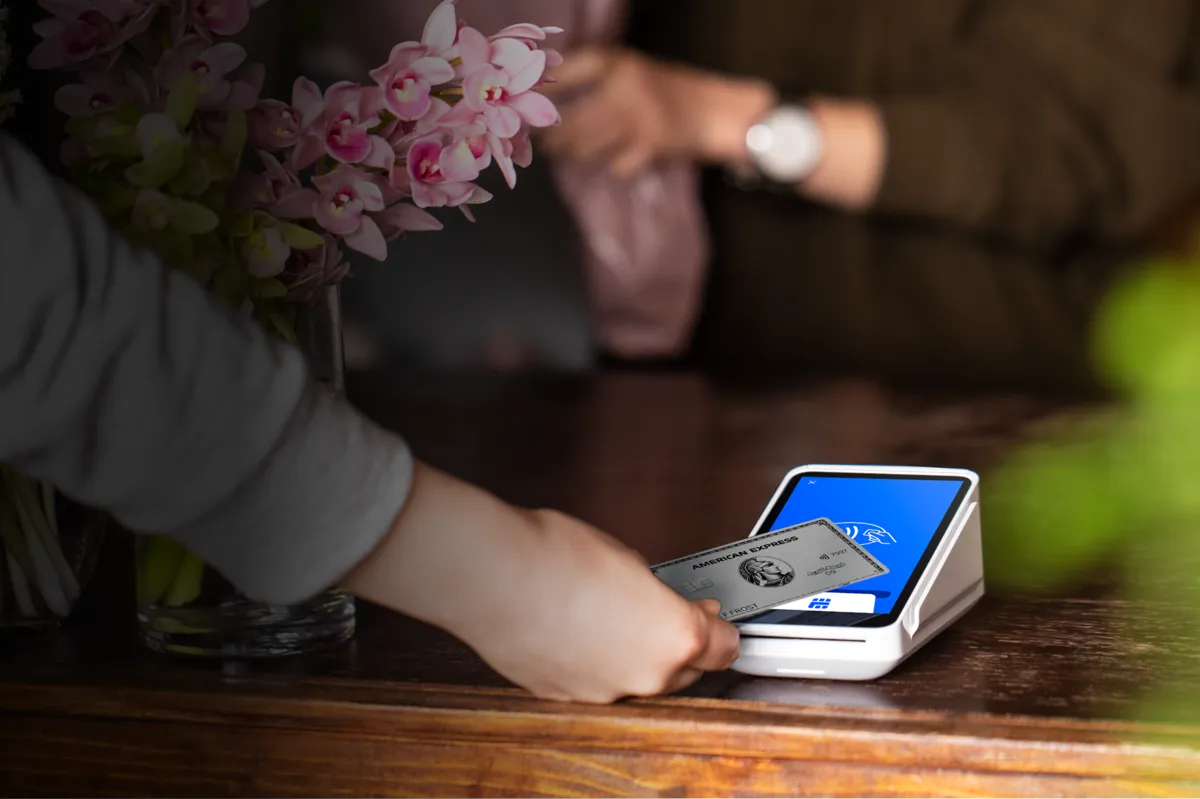
American Express has confirmed it will prohibit merchants from surcharging its cards later this year, aligning itself with the Reserve Bank's broader payments reforms. While the initial RBA regulation announced in March applies to Visa, Mastercard, and eftpos networks, Amex has indicated that it will fall in line with the rest of the industry.
This means that from 1 October 2026, merchants accepting American Express will no longer be permitted to apply a surcharge on transactions. The decision was revealed through a quiet update to its merchant website rather than any kind of formal announcement.
It's a notable move, given American Express was a wildcard of the whole reform. As a closed-loop network, Amex isn’t actually covered by the RBA's changes, and was not required to prohibit surcharging from 1 October.
A spokesperson for American Express shared the following statement.
"American Express supports the Reserve Bank of Australia's recent review of merchant card costs and surcharging. We agree with the RBA's recommendation to remove surcharging, which we have consistently said creates a poor and inconsistent experience for consumers. With the RBA and Government's policy intentions on surcharging clear, American Express will align with these changes from 1 October 2026. We will work directly with our merchants and partners over the coming months on this transition."
What's particularly interesting is that this information went out on 5 June with nearly zero fanfare. Given how many Australians are eating up the surcharge ban as a great move that'll reduce costs, you'd think Amex would want in on that PR too.
What Is The RBA Surcharge Ban?
We covered the RBA's payments system reforms in detail when they were first announced, so here's the short version.
From 1 October 2026, surcharging is banned on eftpos, Mastercard and Visa transactions. Interchange fee caps are being slashed at the same time, with consumer credit cards from 0.8% down to 0.3%. These interchange fees form part of the funding for rewards credit cards, including sign up bonuses and perks like lounge access, and reducing them is expected to gut loyalty credit card benefits.
Amex was carved out of all of it, because unlike Visa, Mastercard, and eftpos, Amex acts as both the card issuer and the payment network. Although, they have now decided to remove surcharges too.
Amex Aligns With RBA Surcharge Ban
Right now, the surcharge gap between networks is small enough that, to a certain extent, few people notice. A cafe might charge 1.6% for Visa or Mastercard, and 2% for Amex, which is a 0.4 percentage point difference. That’s a bit annoying, but not enough to make everyone leave their Amex card at home.
From October, that comparison disappears. Visa, Mastercard and eftpos surcharges drop to zero. If that cafe kept slugging a 2% surcharge for Amex cards, it wouldn't be a small premium anymore, it would be an enormous difference. Plus, with most businesses being forced to bake in the cost of accepting payment, Amex cardholders could have ended up paying twice.
That's not a position Amex can afford to be in. Its entire business model depends on people actually pulling the card out of their wallet, and being the one card in Australia that still costs extra would not be a great look.
So while this is a voluntary decision, it is also arguably one of the only commercially realistic options available.

Why The Silence?
Amex's quiet rollout strategy is particularly interesting. After all, when consumers hear ‘Amex is removing surcharges’, most will assume it's a win. Much like the RBA's surcharge ban, which many see as some kind of money-saving gift, when that is far from the truth.
But while Amex will voluntarily ban surcharges from 1 October, it hasn't announced any reduction in its merchant acceptance fees. In other words, the cost for a business to accept Amex hasn't changed. The only thing that has is the merchant's ability to recover that cost through a surcharge.
Perhaps that's why Amex hasn't made a big deal of the announcement. While ‘no more surcharges’ makes for a great headline, it invites businesses to point out that they have lost a cost-recovery mechanism, without seeing any reduction in the cost of accepting Amex.
Will Card Acceptance Fees Drop For Businesses?
Interchange fees are only one component of a business's cost of accepting cards. The total merchant service fee charged by payment providers such as CommBank, Square, and Tyro also includes scheme fees and the provider's own acquiring margin.
While the RBA has reduced interchange caps, payment providers are under no obligation to pass those savings on to merchants. So far, Australia's largest payment providers have been noticeably quiet on whether businesses will actually pay less to accept cards from October.
CommBank's guidance is particularly telling. On its RBA card surcharge reforms page, the bank says there are "no immediate changes" to merchant service fees, adding that businesses will be notified if their pricing changes in future. In other words, despite lower interchange costs, businesses have not yet been told to expect lower acceptance fees.
Square, one of Australia's most popular payment providers for small businesses, also appears to be maintaining its current 1.6% in-person transaction fee. While the company has published guidance on the surcharge ban, it has not announced any reduction in merchant pricing.
Unless payment providers choose to lower their fees, someone else will ultimately bear the cost.
Prices Are Still Going Up, Just Invisibly
Under the current rules, a surcharge can't legally exceed what it costs a business to accept that card payment. But once businesses bake merchant service fees into the price of goods and services, that isn’t the case.
For example, lets consider a cafe charging $5 for coffees and using Square to accept payment. A 1.6% surcharge would be 8 cents, making the current cost $5.08 because the surcharge can't exceed the real cost.
From October, that constraint disappears entirely because there's no surcharge left to constrain. The 1.6% doesn't vanish, it just gets folded into the price of the coffee itself. The problem is, businesses won’t want to increase menu prices by random amounts like 8 cents when baking in the surcharge to the overall price. So that $5 coffee might become $5.10 or maybe even $5.50 once the owner rounds up for simplicity.
What you have to remember is that while card surcharges may end, they won't disappear. They're simply becoming part of the price tag, and this is likely to cost consumers even more.

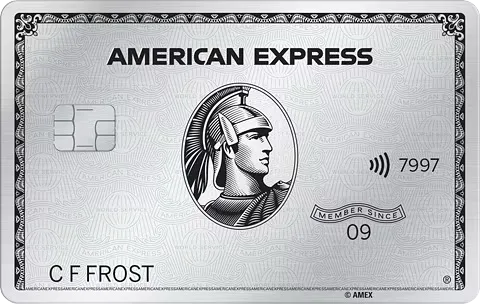
American Express Platinum Card
Offer ends 6 Oct 2026
Sign-up bonus
340,000
bonus Membership Rewards points
- Earn rate Up to
- 2.25 pts / $1
- Our rating
American Express Platinum Card
Offer ends 6 Oct 2026
Sign-up bonus
340,000
bonus Membership Rewards points
- Earn rate Up to
- 2.25 pts / $1
- Our rating