Should I Cancel My Middle East Flight? Travel Advice For Australians
What to do and your rights to a change or cancellation.

Military conflict in the Middle East continues to impact Australian travellers, with hundreds of thousands of flights already delayed or cancelled due to airspace closures. This situation not only affects Australians flying to the Middle East, but also those transiting in the region, who planned to connect onwards to Europe, Africa, and beyond.
If your flight has been affected, or you are concerned about upcoming travel plans, this guide breaks down the current situation and explains what you should do next.
What Flights Are Affected By Airspace Closures?
At the time of writing, the airspace over Bahrain, Iran, Iraq, Israel, Kuwait, Qatar, and Syria is currently closed. Jordan has partially closed its airspace, and there are very few flights over the United Arab Emirates.
Data from FlightAware indicates that as of Tuesday, at least 17,000 flights have been delayed and more than 3,000 have been cancelled globally. It is being reported that over 115,000 Australians are currently in the region.
Should I Cancel My Flight To/Through The Middle East?
The Department of Foreign Affairs is currently recommending Australians avoid travel to countries in the region, including the UAE and Qatar. You can find the latest advice for each country on the Smartraveller website.
We strongly advise that travellers do not rush to cancel their flights to or through the Middle East during this period of uncertainty. This applies even if you don’t want to travel, and it’s the same recommendation we would give in almost every other large-scale event affecting air travel.
The reason you shouldn’t preemptively cancel your Middle East flights is that’s exactly what the airlines want you to do. When passengers cancel too early, it is considered a voluntary change (as in you decided you didn’t want to fly) instead of the airline not fulfilling its agreement to transport you.
If the airspace is closed at your airline’s hub for your travel date, it is pretty obvious that the airline will end up cancelling your flight. Once that happens, you’re normally entitled to a full refund or rebooking onto later flights with change and cancellation fees waived.
Can I Get Rebooked To Another Route Or Airline?
Requesting your airline to rebook you via another route, or with another airline, is often the smartest move. If an airline cancels your service, it generally still has an obligation to get you to your final ticketed destination. That doesn’t mean it must put you on its own next flight. In many cases, airlines can transfer you to another carrier.
In this case, if you’re trying to get to Europe, you could ask to fly via Asia instead of the Middle East. Whether they will do this depends on seat availability, commercial agreements and how widespread the disruption is, as well as how good the particular phone agent is. But it is completely reasonable to ask.
International flights are governed by the Montreal Convention. While it doesn’t specifically require airlines to book you on a competitor, it does state that airlines are liable for damage caused by delay unless they took “all reasonable measures” to avoid it. In practical terms, this means airlines should consider viable alternatives that reduce your delay.
If you’re facing cancellation or a multi-day delay, ask clearly and calmly about alternative routings and partner airline options.
Will My Travel Insurance Cover These Delays?
In most cases, no. The vast majority of Australian travel insurance policies exclude claims arising from war, military conflict, civil unrest or government-imposed airspace closures. That applies even if you booked your trip well before the situation escalated.
There are exceptions to this, with some policies offering “cancel for any reason” products that may offer partial reimbursement. The best way to check your cover is by reviewing your PDS (product disclosure statement), a huge and boring document that explains what is and isn’t included under your policy.
To make life easier, download your PDS and upload it into an AI tool, asking it to identify relevant exclusions and cancellation clauses. Just be explicit that it must rely only on the text of your PDS and not pull in outside information. Otherwise, you risk getting a generic answer rather than one specific to your policy.
Need Travel Insurance?
Check out our curated list of the best travel insurance deals here!
Temporary Airline Refund And Rebooking Policies
Each airline is handling Middle East disruptions slightly differently, with its own travel waivers, refund rules and rebooking flexibility. Here’s what Emirates, Qatar, Etihad, Qantas, and Virgin Australia are offering affected passengers.
Emirates
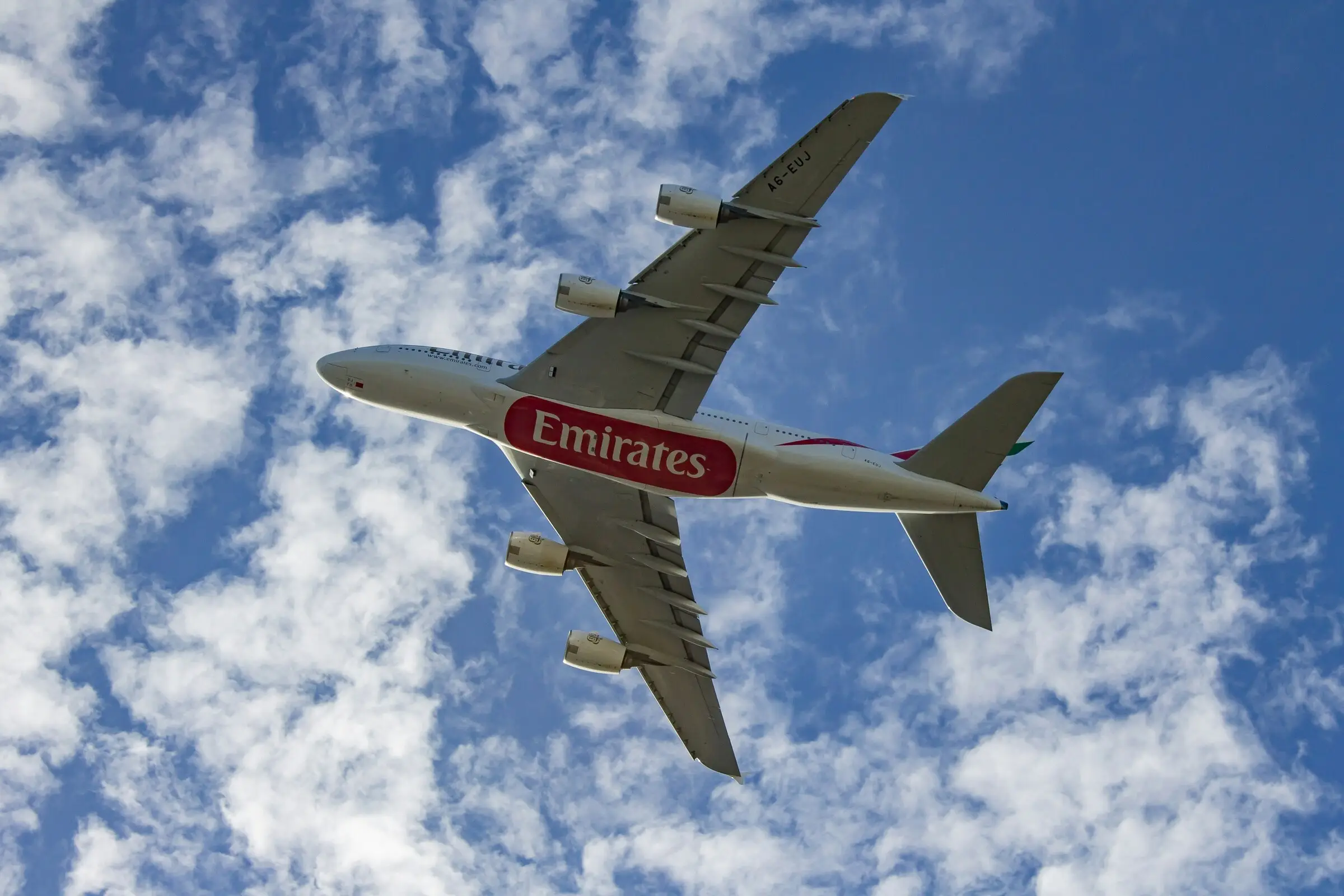
Emirates has temporarily suspended most flights to and from their Dubai hub, although selected services are still operating. The airline advises passengers not to visit the airport unless they have been notified that their flight is operating.
Some fifth freedom flights (those that operate between two countries outside of Dubai), such as Sydney to Christchurch, are still operating.
Emirates travel policy as of 3 Mar 2026: rebooking on a different flight to your intended destination for travel on or before 20 March. It is not specified whether or not this will be free.
Emirates update page: https://www.emirates.com/au/english/help/travel-updates/
Qatar Airways
Qatar Airways flights to and from their Doha hub are temporarily suspended due to the closure of Qatari airspace. Qatar Airways will resume operations once the Qatar Civil Aviation Authority announces the safe reopening of Qatari airspace.
Qatar travel policy as of 3 Mar 2026: Flights departing between February 28 and March 10 are eligible for complimentary refunds or date changes of up to 14 days from the original travel date.
Qatar update page: https://www.qatarairways.com/en-au/travel-alerts.html
Etihad Airways
Etihad Airways has advised that flights to and from its Abu Dhabi hub are temporarily suspended until 2pm UAE time on 4 March 2026. It seems that a handful of flights are still running, but the airline advises passengers not travel to the airport unless they have been contacted by Etihad Airways and told their flight is operating.
Etihad travel policy as of 3 Mar 2026: Tickets issued on or before 28 February 2026, with original travel dates up to 7 March 2026, may be cancelled for a full refund or rebooked onto another Etihad-operated flight up to 18 March 2026.
Etihad update page: https://www.etihad.com/en-au/manage/flight-status#travelupdates
Qantas
Qantas does not operate flights to the Middle East, but some of its partner airlines do, such as Emirates and Qatar. As such, the airline is offering additional flexibility for flights through the UAE booked via Qantas.
Qantas travel policy as of 3 Mar 2026: Flights booked before 1 March, with travel dates between 1 and 5 March, can be refunded in full or rescheduled within 10 days from the original departure dates without fees.
Qantas update page: https://www.qantas.com/au/en/travel-info/travel-updates.html
Virgin Australia
All Virgin Australia flights to and from Doha, which are operated by Qatar Airways planes and crew, have been cancelled for 3 and 4 March, in addition to four services on 5 March.
Virgin Australia travel policy as of 3 Mar 2026: Doha flights are eligible for free booking changes or refunds up to and including 10 March 2026.
Virgin Australia update page: https://www.virginaustralia.com/au/en/book/manage-booking/disruption-info/updates-on-virgin-australia-doha-services/
Summing Up
Right now, the key is patience and flexibility. If your flight to or through the Middle East hasn’t been cancelled, rushing to cancel could cost you valuable options. Once an airline cancels your service, you’re typically entitled to a refund or fee-free rebooking. In many cases, you can request alternative routings or partner airlines.
Best practice is to keep monitoring airline updates and Smartraveller advice, check your specific ticket rules, and only make a voluntary cancellation if you’re certain you won’t travel under any circumstances. In most disruption events like this, waiting for the airline to act puts you in the strongest position.