RBA Moves To Ban Surcharges: Rewards Credit Cards Doomed?
From October 2026, the RBA will scrap card surcharges

The day frequent flyers and points collectors have been dreading has finally arrived, and it’s not great news. Australia’s era of easy credit card rewards may be coming to an end sooner than you think.
The Reserve Bank of Australia (RBA) has today handed down a sweeping overhaul of the payments system, targeting the fees that sit behind everyday card transactions. While the reforms are designed to lower costs for businesses and simplify pricing for consumers, they could also strip away the financial engine that funds those card perks and huge sign-up bonuses.
The big news is that surcharges will be banned on debit and credit cards utilising the EFTPOS, Mastercard and Visa networks. Interchange fee caps will also be tightened, most notably for consumer credit cards, where the cap will be reduced from 0.8% to 0.3%. These changes are expected to take effect from 1 October 2026.
So while your morning coffee might soon cost exactly $5, and not $5.10, the loyalty points you earn on that transaction, and the credit card perks you’ve become accustomed to, will more than likely be drastically reduced.
What Is The RBA Changing?
The direction of the reforms is straightforward: reduce costs and clean up pricing.
- Lower interchange fees - The RBA will push fees below current benchmark levels, arguing the existing caps are no longer effective.
- Surcharges will be removed - The RBA has taken a firm position that surcharging is no longer working as intended and should be eliminated as part of the new system.
- Greater transparency - Payment providers will need to publish clearer fee information so merchants can better understand and compare costs.

Interchange Fees: The Hidden Engine Behind Your Rewards
Every time you tap your card, a small fee is paid by the merchant’s bank to your card issuer. This is known as an interchange fee, and it’s the quiet engine powering your credit card rewards.
Under the RBA’s new settings, those fees are being cut sharply.
The debit card interchange fee cap will be reduced from 0.2% to 0.16%, or from 10 cents to 8 cents when charged as a fixed amount. For consumer credit cards, the cap will be reduced from 0.8% to 0.3%.
Business credit cards will remain largely unchanged, with the interchange fee cap holding at the current 0.8%. Meanwhile, foreign-issued cards will face a new cap of 1%.
These numbers might seem small, but they underpin the entire rewards ecosystem. Interchange fees are one of the main revenue streams banks use to fund points earning, perks like airport lounge access and travel insurance, as well as large sign-up bonuses. When those fees are reduced, banks aren’t going to simply accept that they will make less money; they will begin to cut rewards and increase fees elsewhere.
These RBA Changes Might Not Lower Prices
It’s the obvious argument: lower fees should mean lower prices for consumers. But that only makes sense in theory.
Look at Europe, where interchange fees were cut in a very similar way. In fact, the RBA has essentially copied the European model. For example, the UK cut interchange fees from 0.8% to 0.3% - just like the RBA’s masterplan they have been working so hard on.
So are things cheaper in Europe? Not really. Do you think Woolworths and Coles are going to give you a discount on your groceries with the savings they receive? Unlikely. Is the restaurant that’s already baked a surcharge into a $28 pasta suddenly going to drop the price to $27.50? Nope - in reality, most businesses will simply absorb the savings and keep prices where they are.

Even at the payments level, the difference isn’t dramatic. If you run payments through Stripe in the UK, you’ll pay around 1.5% in fees, compared to roughly 1.7% in Australia.
Where the impact is obvious is on rewards.
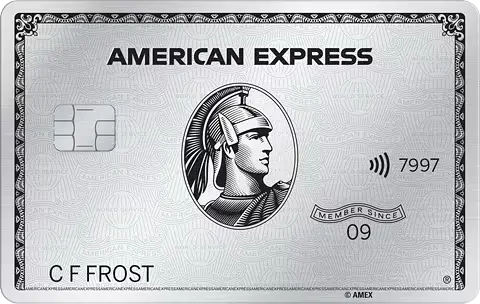
In lower-interchange markets like the UK, rewards are typically less generous. For example, the UK version of the American Express Platinum earns around 0.5 Avios per $1 spent, compared to 0.75 Avios per $1 for the Australian version. But that Australian rate is already down from 1.125 Avios per $1, before American Express devalued transfers in December 2025, ahead of these expected changes.
What About American Express?
One key wildcard with all this is American Express.
As mentioned above, the changes only affect the EFTPOS, Mastercard and Visa networks. American Express operates on a closed-loop, where they act as both the network and the issuer. That structure has historically allowed it to charge higher merchant fees, and offer more generous rewards.
So in the short term, American Express cards may become more attractive, as they retain their ability to offer premium perks and larger bonuses. That said, American Express is unlikely to remain insulated for long. To stay competitive in the lower-cost system, it may ultimately need to bring down fees to get closer to the broader market.

The most recent Amex Membership Rewards devaluation in December 2025 was cited as being linked to these (at the time) expected changes. We’ve also seen American Express today announce significant fee hikes and benefit reductions, with some of those changes taking effect on the same day these RBA reforms are expected to begin.
Summing Up: Winners & Losers
The RBA’s reforms make sense at a system level, but they create a clear split for consumers.
For most people, payments should become simpler. Surcharges will disappear, and there is an argument that some businesses will pass on these lower costs. But because many cafes already bundle surcharges into the sticker price, don’t expect your coffee to suddenly get cheaper. Most businesses will simply take the savings as a win and keep prices the same.
There is also a fairness argument. Under the current system, all consumers effectively pay for credit card rewards through higher retail prices, even if they don’t use rewards cards. Removing those distortions reduces that cross-subsidy.
But for the vast majority of rewards-focused consumers, the October changes could be devastating. With interchange fees cut by more than 60%, it’s not unrealistic to see earn rates fall sharply.
Take a typical rewards card earning 1 point per $1 spent. That earn rate is currently supported by interchange fees of around 0.8%. If those fees are cut to 0.3%, it isn’t unrealistic that the earn rate will fall to 0.5 points per $1 spent.
In practical terms, that means earning half as many points for the same spend. A cardholder spending $50,000 a year could soon earn 25,000 points instead of 50,000.
Layer on the likely dilution of lounge access and travel insurance benefits, alongside rising annual fees, and the value proposition starts to look very different. It raises a simple question: will these changes actually leave consumers better off?